Main corridors at a glance
Verified fares as of June 2026. All prices in Egyptian pounds (EGP). Booking method: ENR website or station counter unless noted otherwise.
| Route | Best class | Typical journey | Fare from (EGP) | Booking |
|---|---|---|---|---|
| Cairo → Alexandria | AC Express 2nd | 2h 25m | 95–135 | ENR site / counter |
| Cairo → Luxor (day) | AC Express 1st | 9h 30m | 290–380 | ENR site / counter |
| Cairo → Aswan (day) | AC Express 1st | 13h 00m | 350–460 | ENR site / counter |
| Cairo → Luxor/Aswan (night) | Tourist sleeper | 9–13h | 950–1,600 | Wataniya portal |
| Luxor → Aswan | AC Express 2nd | 3h 10m | 65–90 | ENR site / counter |
| Cairo → Port Said | AC Express 2nd | 3h 30m | 80–115 | Counter / ENR |
| Cairo Metro (per trip) | Token / tap | 5–45 min | 8–10 | Station machine |
Fares verified June 2026 by field check. Tourist surcharges may apply on some express services — see individual service notes below.
Cairo – Alexandria Express
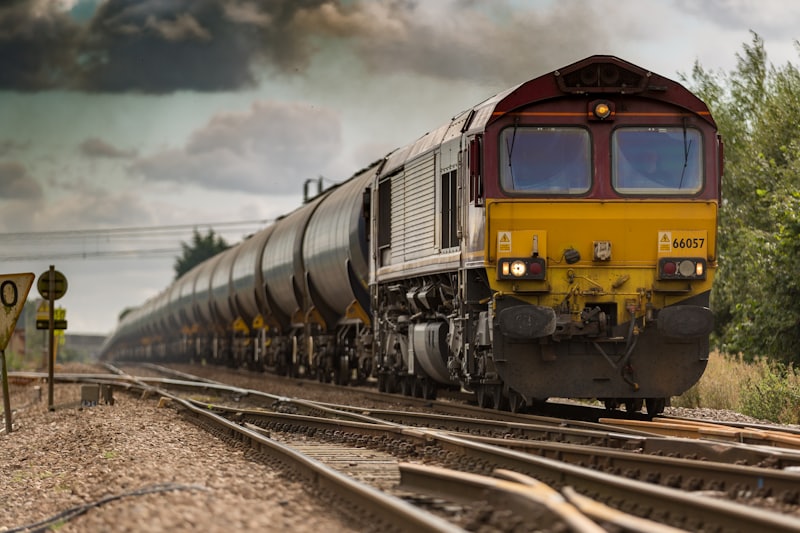
The Cairo–Alexandria corridor is the highest-frequency intercity rail service in Egypt, with departures throughout the day from Cairo Ramses and Alexandria Mahattat Misr. The journey covers approximately 225 kilometres across the Delta and takes between 2 hours 15 minutes and 2 hours 40 minutes depending on the service type. The fastest trains are the Spanish Talgo sets designated as VIP and AC Express; the slower air-conditioned expresses are still comfortable and cost slightly less.
For travellers, the practical choice is almost always the air-conditioned second class. The seats are reclining, the carriage is cooled, and the fare — typically EGP 95 to 135 depending on the specific service — represents very strong value for a sub-three-hour intercity leg. First class on this route adds a wider seat and marginally more legroom for an additional EGP 40–60; the difference is noticeable on a longer trip but marginal at this distance.
Booking is possible through the ENR website for most services, though card acceptance for foreign-issued Visa and Mastercard has been intermittent in 2025–2026. If the website rejects your card, the station counter at Cairo Ramses has queues that move reasonably quickly outside of Eid and summer school holidays. For weekend departures, buying a day in advance is enough for most services; the VIP Talgo on Friday afternoons from Cairo can sell out and benefits from earlier booking. The booking guide has the current status of the ENR website's foreign card acceptance and the counter process step by step. See also intercity routes for the full timetable summary.
Cairo → Alexandria
Distance: ~225 km
Best class: AC Express 2nd
Journey time: 2h 15m – 2h 40m
Fare (2nd): EGP 95–135
Fare (1st): EGP 140–195
Frequency: Approx. every 40 min peak
Book: ENR site or Cairo Ramses counter
Tourist supplement: None on this line
Cairo – Luxor Daytime Express
Cairo → Luxor (day)
Distance: ~670 km
Best class: AC Express 1st
Journey time: 9h – 10h
Fare (2nd): EGP 230–290
Fare (1st): EGP 290–380
Frequency: 2–3 day departures
Tourist supplement: Applied on some services — confirm at booking
Book: ENR site or Cairo Ramses counter
The daytime Cairo–Luxor express is a genuine alternative to the sleeper for travellers who want to see the Nile valley pass by and don't want to pay the sleeper premium. Departures leave Cairo Ramses typically in the early morning, arriving in Luxor in the late afternoon. At roughly 670 kilometres, the journey takes nine to ten hours depending on the service; the faster trains make fewer intermediate stops.
On this distance, first class is worth the premium over second. The seat pitch is noticeably longer, the seat reclines further, and on a nine-hour journey those differences matter. First class fares run EGP 290 to 380 for the express services. Second class at EGP 230–290 is still comfortable, air-conditioned and perfectly serviceable — it's the class most independent travellers use on this leg.
A tourist supplement applies on certain express services on the Cairo–Luxor/Aswan line. This is a separate fare tier for foreign passport holders that is applied inconsistently — some services, some booking channels, some ticket agents apply it; others do not. Our route guide records which services we have observed it on, and Khaled's fares database flags the current status. If you're buying at the counter, having the Egyptian pound amount in hand and asking for the specific train number minimises the chance of being quoted an inflated figure.
For travellers who prefer sleeping on the move, the same corridor is also served by the tourist sleeper — compare both options in the sleeper guide, where we break down the fare difference and the comfort trade-offs by journey type.
Cairo – Aswan Tourist Sleeper

The Wataniya tourist sleeper is the best-known rail product in Egypt for international visitors, and it genuinely earns its reputation. Operated by a separate private company under ENR licence, the train runs nightly between Cairo Ramses and Aswan, stopping at Luxor. The service runs south on alternate nights from Cairo and north from Aswan, so the schedule has a rhythm that determines which direction you can travel on which night.
Cabins are private doubles: two berths, fold-down table, individual lighting, lockable door. Meals are included — dinner on the southbound departure, breakfast on arrival. The standard of catering is functional rather than refined, but the inclusion matters because it simplifies the journey. Cabins can be booked as single occupancy at a supplement; solo travellers are not assigned a random cabin mate. The fare for a standard double cabin runs EGP 950 to 1,200 per person when booked through the Wataniya portal; single-occupancy supplement adds approximately 50%.
Booking is exclusively through the Wataniya portal — this is the one Egyptian rail product that cannot be bought through the main ENR website or at a station counter for foreigners. The portal accepts foreign credit and debit cards more reliably than the ENR site. Availability on popular dates (January, October, holiday weekends) goes two to three weeks ahead. For multi-city itineraries that include the sleeper, see pass types for how we structure the leg sequence, and check the sleeper trains guide for the full cabin category breakdown and current booking link.
Cairo → Luxor/Aswan (sleeper)
Operator: Wataniya (private)
Cabin: Private double · meals included
Cairo → Luxor: ~9h
Cairo → Aswan: ~13h
Fare/person (double): EGP 950–1,200
Single supplement: ~50% add-on
Book: Wataniya portal (not ENR site)
Advance booking: 14–21 days recommended in peak season
Luxor – Aswan Express
The Luxor–Aswan leg is a short, scenic daytime run along the Nile — roughly 220 kilometres taking approximately three hours by the faster express services. This is the leg most visitors take as a standalone after arriving in Luxor from Cairo overnight, spending two or three days at the temples, then continuing south to Aswan and Kom Ombo.
Express services on this leg are cheaper than on the main Cairo corridors. Air-conditioned second class fares run EGP 65 to 90; first class adds EGP 20–30. The shorter journey time makes the class difference even less significant than on the Cairo–Luxor run. Most travellers choose second class and are comfortable for the three hours. The train runs alongside the Nile for a significant portion of the journey — sit on the right side heading south (west bank of the river) for the best water views, on the left for the desert approach to Aswan.
Tickets can be bought at the Luxor station counter or through the ENR website. Luxor station is smaller than Cairo Ramses and the counter queues move quickly. This leg rarely requires advance booking except during peak holiday periods. If you're arriving in Luxor on the overnight sleeper, you can buy the onward Aswan ticket at Luxor station on the morning of travel. See intercity routes for the full Luxor–Aswan timetable and station guide for Luxor and Aswan station layouts.
Air-Conditioned 1st Class
ENR air-conditioned first class is the premium seated option on all intercity express trains. Seats are wider than in second class — typically three-abreast configuration versus four-abreast — with a greater recline angle and additional legroom. On long daytime journeys of seven hours or more (Cairo to Luxor, Cairo to Aswan), the additional space is a genuine comfort upgrade that most travellers with the budget for it consider worthwhile.
First class carriages are air-conditioned to the same standard as second class on the express services — this is not a distinction that matters on cooling, only on space. The fare premium for first class over second is typically EGP 60–100 on long corridors. On short legs like Luxor–Aswan at three hours, the premium is less justified. Our standard recommendation is: first class for day journeys exceeding six hours, second class for anything shorter.
Seat reservations are mandatory in both first and second class on express trains — you cannot board without a reserved seat number. This is enforced at the platform gate on most services. The booking guide covers how to select a specific seat through both the ENR website and at the counter, and flags the carriages on some train sets where the air-conditioning units are known to run cold enough to be uncomfortable.
Air-Conditioned 2nd Class
Air-conditioned second class is the practical default for most intercity travel in Egypt and the class we recommend most often to independent travellers planning their first Egyptian rail trip. The carriages are cooled, the seats are reserved and numbered, and the fare is low enough that the value calculation is straightforward even on a tight budget.
Seat configuration is four abreast, with fold-down tray tables and overhead luggage racks adequate for a standard-size carry-on bag plus personal item. On the express trains — Spanish Talgo, Bombardier sets and the newer ENR fleet — the second class carriages are noticeably newer than the equivalent on ordinary trains. Cleanliness is variable and depends on the specific service; the express trains on the high-frequency Cairo–Alexandria corridor maintain a consistently higher standard than regional services.
For the Cairo–Aswan corridor specifically, second class on the day train saves EGP 60–80 versus first class across a 13-hour journey. That's a meaningful saving, but 13 hours in a four-abreast seat without the additional recline of first class is noticeable. Our field notes from Heba's most recent ride on this leg (March 2026) note that the second class carriage on the 08:00 Cairo–Aswan departure was comfortable in the cool morning hours but warm from Minya southward in the afternoon despite the air conditioning running. This is logged as a route-specific observation, not a general criticism of the class. Compare pass type options if you're doing the full Cairo–Luxor–Aswan loop and want to optimise across the legs.
Ordinary (Non-Air-Conditioned) Class
Ordinary class is the cheapest option on Egyptian trains and the class most local travellers use for short regional hops. It operates on a larger number of services than the air-conditioned express trains, making it the only option for some stops on the Delta lines and regional corridors. Understanding ordinary class is useful even if you don't plan to use it, because it explains the fare gap you'll see when comparing options on the ENR booking system.
Ordinary carriages are not air-conditioned; windows open and airflow is the cooling mechanism. In Egyptian summer (June through September) temperatures inside ordinary carriages on long legs can exceed 40°C by midday. The class is genuinely unsuitable for journeys longer than two to three hours in summer and for travellers unaccustomed to high heat. In the cooler months — October through April — ordinary class on a two-hour regional leg is entirely manageable and can be an interesting experience of local travel culture.
Ordinary class fares on intercity lines run EGP 25–60 for short legs. We document ordinary class availability in the rail network guide, particularly for the Delta regional lines where it is the standard option. If you are planning a regional excursion from Cairo to Tanta, Zagazig or similar towns on a day trip in cool weather, ordinary class is a practical choice. For anything longer or in summer, the express fare is money well spent.
Cairo Metro — Lines 1, 2 and 3
The Cairo Metro is the fastest and cheapest way to move across the city. Three lines serve the greater Cairo area, covering the journey from Helwan in the deep south to Shubra El Kheima in the north and connecting Giza, central Cairo, the airport corridor and the eastern suburbs. Understanding which line serves which destination saves significant time against taking a taxi in traffic.
Line 1 runs north–south through the city centre from Helwan to El Marg, passing through Maadi, Sadat (Tahrir Square), Mubarak (Ramses/main intercity station) and Ain Shams. It is the oldest line but the most useful for travellers arriving at Cairo Ramses and heading to the city centre or to Maadi for accommodation.
Line 2 runs east–west through central Cairo, connecting Shubra El Kheima in the north via Mubarak (interchange with Line 1) to Giza station. This line serves the Egyptian Museum area (Sadat interchange) and is the most direct route to Giza for travellers crossing from the east bank.
Line 3 is the newest and runs from Adly Mansour interchange hub in the east through Attaba, Bab el Louk, Nasser and westward toward Imbaba and beyond in the ongoing extensions. Line 3 serves the Cairo Airport corridor via Adly Mansour, where a free shuttle bus connects to Terminal 3. This is the cheapest way in from the airport by a significant margin.
Tickets are sold as tokens at station machines or at the manned kiosks. A single journey costs EGP 8–10 regardless of distance. The new tap-on card system, introduced in late 2023, allows loaded cards to be tapped at turnstiles — we documented the foreign-card top-up process in November 2023 and the desk keeps this guidance current. Women-only carriages are the front two carriages of each train, marked by pink signage on the platform. The full metro guide is at cairo-metro.html.
Cairo Metro quick facts
Lines: 3 (Line 1, 2, 3)
Key interchange: Mubarak (Ramses) — Lines 1+2
Airport connection: Line 3 → Adly Mansour → free shuttle to T3
Single fare: EGP 8–10
Ticket: Token or tap card
Women-only: Front 2 carriages
Operating hours: ~05:30–00:30 (Line 1 extends to 01:00 Fri/Sat)
Sleeper Cabin — Wataniya Classes
Wataniya sleeper trains offer two main cabin categories for the Cairo–Luxor–Aswan route: standard double cabin and premium double cabin. Both are private (lockable, two berths) and include the same meal service — dinner heading south, breakfast northbound. The premium cabin is larger, with a wider lower berth and more storage space; the fare premium over standard runs EGP 350–500 per person depending on the booking date and season.
For most travellers, the standard cabin is the right choice. The additional space in the premium is noticeable but not transformative on a nine to thirteen hour journey where most of the time is spent sleeping. The premium makes more sense for travellers over 190 centimetres, for whom the lower berth width is a practical consideration, and for those booking on the basis of comfort rather than cost.
Solo travellers can request lower or upper berth preference at booking. The upper berth has a ladder and a small net for personal items; the lower berth has more floor space. The train's motion is gentle on this corridor and rocking is rarely enough to disturb sleep. The sleeper trains guide includes our most recent field notes on cabin condition and meal quality, plus the current booking link for the Wataniya portal. For travellers deciding between the sleeper and a day train with a hotel night, the Pass Plans page has the cost comparison built into the Multi-City Plan.
Delta Regional — Mansoura, Tanta, Zagazig
The Nile Delta regional network radiates from Cairo northward and east-northeast, serving the major Delta cities of Mansoura, Tanta, Zagazig, Damanhur and Kafr el-Sheikh. These lines are less polished than the main Upper Egypt corridor — services are slower, carriages are predominantly ordinary class, and timetable adherence is looser — but they are the realistic option for travellers who want to see the Delta or have itineraries that extend beyond the standard Cairo–Luxor–Aswan circuit.
Journey times from Cairo vary: Cairo to Tanta takes approximately 70 minutes on a fast regional service, Cairo to Mansoura around two hours, Cairo to Zagazig about 90 minutes. Fares are very low — typically EGP 20–50 for these legs. Buying at the station counter on the day is the norm for these services; ENR website coverage of regional trains is patchy.
The desk's coverage of Delta regional services is detailed in the rail network guide. We do not include Delta regional legs in standard multi-city planning unless explicitly requested, but the information is available in our reference content for travellers building custom itineraries. If your route includes a Delta stop, note it when you send your route and we'll include the relevant service notes.
Port Said Line — Cairo via Ismailia
The Cairo–Port Said line runs east through Ismailia to the Mediterranean coast, covering approximately 220 kilometres. Journey time from Cairo is around three and a half hours to Port Said on the faster services. This is not a standard tourist corridor, but it serves travellers who want to see the Suez Canal at Ismailia, continue to Port Said for ferry connections, or who have business in the canal zone.
Services on this line include a mix of air-conditioned expresses and ordinary class trains. The express services to Port Said use air-conditioned rolling stock and are the sensible choice; fares run EGP 80–115 for second class. Ismailia is a useful halfway stop for travellers who want to see the canal and return to Cairo the same day — the leg takes under two hours from Cairo and the town is compact and walkable around the main canal-front areas.
The desk includes Port Said line notes in our network guide and can include this corridor in a multi-city plan if requested. The combination of Cairo → Ismailia → Port Said by train, with an overnight in Port Said and a return leg, is a logical two-day add-on for travellers with time and interest in the canal. Contact us through the planning request form to include this in a route plan.
Station Transfers — Cairo, Luxor, Aswan
Arriving at a major Egyptian railway station and navigating to your accommodation or onward transport is a separate logistical task from booking the train. We document it because it's where many independent travellers lose time, overpay a taxi driver, or simply get confused in a busy station environment with limited English signage.
Cairo Ramses is the main intercity terminus and connects directly to the Cairo Metro at Mubarak station. The metro entrance is within the station building. This is the fastest, cheapest exit from the station: EGP 8–10 versus EGP 80–200 for a taxi to the city centre depending on traffic. The station building is large, multi-level and moderately confusing on first arrival; the metro signs are in Arabic and English, which helps.
Luxor station is smaller and easier to navigate. Taxis are available from the forecourt; standard fares to central Luxor hotels are EGP 40–60. The east bank city centre is walkable from the station for travellers with manageable luggage. The tourist bus stop for the hop-on service is two minutes from the station on foot.
Aswan station is compact and well-signed. Taxis to the Nile-front hotels run EGP 30–50. Felucca operators meet arriving trains at the station forecourt — engaging with them at the station rather than at the waterfront is typically cheaper. Full station layouts, locker availability and accessible route notes are in the station guide.
Build your route plan
Every service above feeds into a custom planning document — legs sequenced, classes chosen, booking channels cited, fares verified. Tell us your cities and dates and we'll build it.